




If your central heating has gone cold or your boiler keeps shutting down, you might be facing a simple case of low pressure. As an expert heating engineer working in High Wycombe, I often see this problem during routine boiler servicing or emergency boiler repair appointments. Fortunately, most cases of low pressure are easy to fix at home. In this guide, we’ll show you how to check boiler water pressure step by step and explain when it’s best to call a professional engineer.
Understanding Why Your Boiler Loses Pressure
Boiler pressure naturally changes as your heating system warms up and cools down, but a consistent drop in pressure often signals an underlying issue. The most common causes include minor leaks, recently bled radiators, or a fault within the pressure relief valve. Identifying the cause helps you decide whether a simple fix will solve the problem or if you should call your local heating engineer.
How to Check Boiler Water Pressure Step by Step
This process is simpler than it sounds and can often prevent unnecessary repair visits.
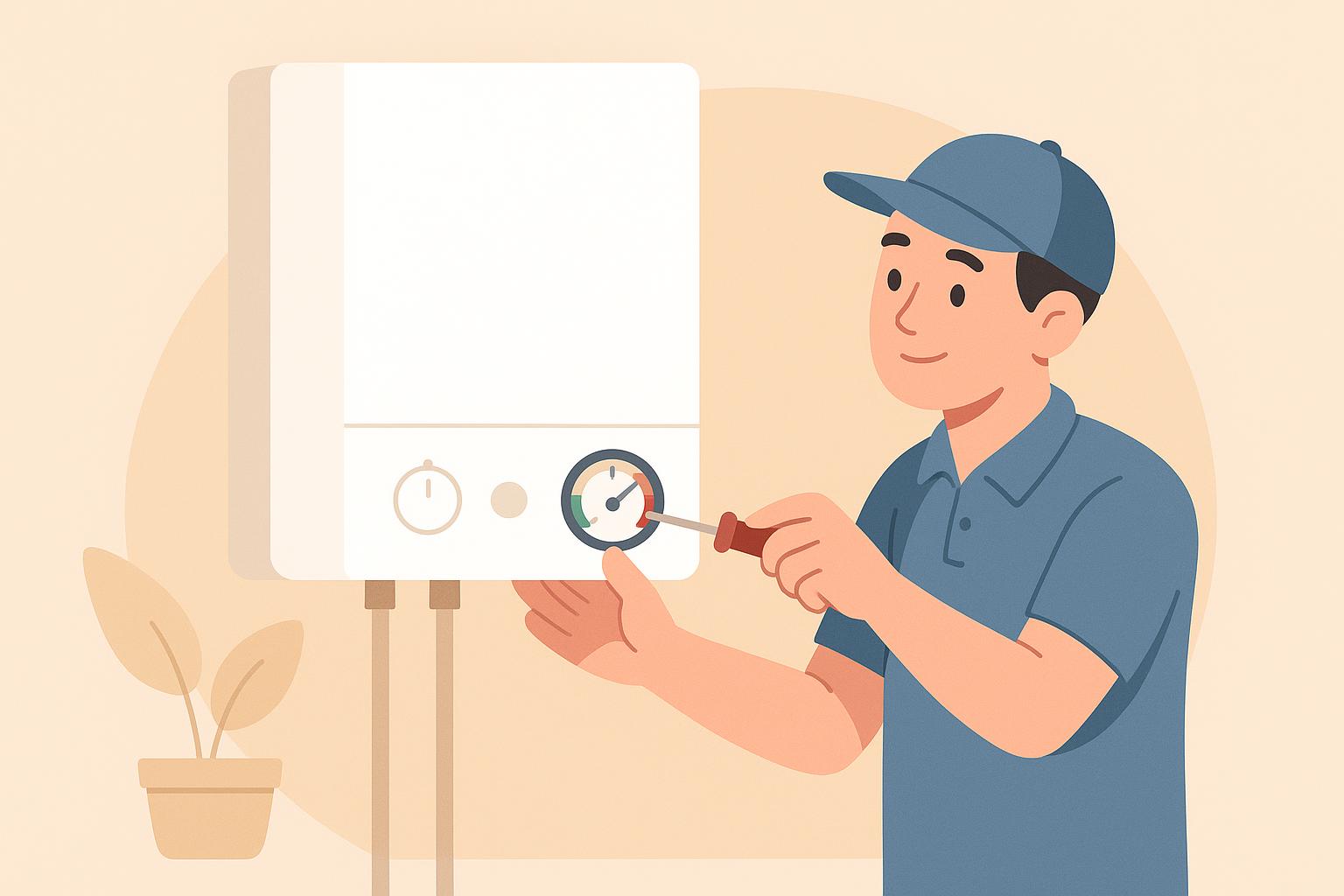
Step 1: Locate the Pressure Gauge
Most boilers have a pressure gauge on the front panel. Depending on your model, it may be digital or a dial with numbers ranging from 0 to 4 bar. The ideal reading for most systems is between 1 and 1.5 bar when the boiler is cold.
Step 2: Check the Current Reading
Turn off the heating and allow the system to cool for at least 15 minutes. Then check the gauge. If it’s below 1 bar, your boiler is under-pressurised and may not run efficiently or at all. If it’s over 2.5 bar, it could be over-pressurised, which might trigger a safety shut-off or cause leaks.
Step 3: Repressurise if Needed
To restore proper pressure, find your filling loop—usually a small silver flexible hose with a valve at each end beneath the boiler. Slowly open one valve and then the other, letting water from the mains flow into the system. Watch the gauge rise back to around 1.3 bar, then close both valves carefully. You can find a detailed visual guide in our article on how to repressurise your boiler.
Step 4: Restart and Recheck
Once the pressure is in range, switch the boiler back on. It should operate normally, with no error codes displayed. If pressure continues dropping again within days, there may be a hidden leak in the system or within the boiler components, and it’s time to call a qualified engineer.
When to Call a Heating Engineer
Not all pressure issues have a quick fix. You should seek professional help if:
- You find visible leaks around the boiler or pipework.
- The pressure repeatedly drops after topping up.
- The boiler locks out and won’t reset.
- You’re unsure how to safely repressurise your system.
In these cases, an experienced heating engineer near you can inspect for faulty valves, damaged expansion vessels, or airlocks that require specialist repair tools. Regular inspections through an annual boiler service can help prevent these problems long before they impact performance.
Preventing Future Pressure Loss
Maintenance is key to avoiding unexpected breakdowns and heating interruptions. Here’s how you can keep your system in top condition:
- Schedule yearly boiler servicing to catch small issues early.
- Bleed radiators at the start of winter to improve efficiency.
- Inspect visible pipework for leaks or damp spots.
- Check your pressure gauge monthly, especially after bleeding radiators.
Staying proactive ensures that if you do lose pressure, you can act quickly before it becomes a bigger issue.
Need Expert Boiler Pressure Repair?
If you’ve followed our guide to check boiler water pressure step by step and your system still isn’t holding pressure, it’s time to get professional support. At Chiltern Boilers, our qualified engineers handle all aspects of boiler pressure repair and annual maintenance for homeowners across the region. We’re here to make sure your home stays warm and worry-free.
For expert boiler servicing, boiler pressure repair, or to book a reliable heating engineer near you in High Wycombe, contact Chiltern Boilers today.